

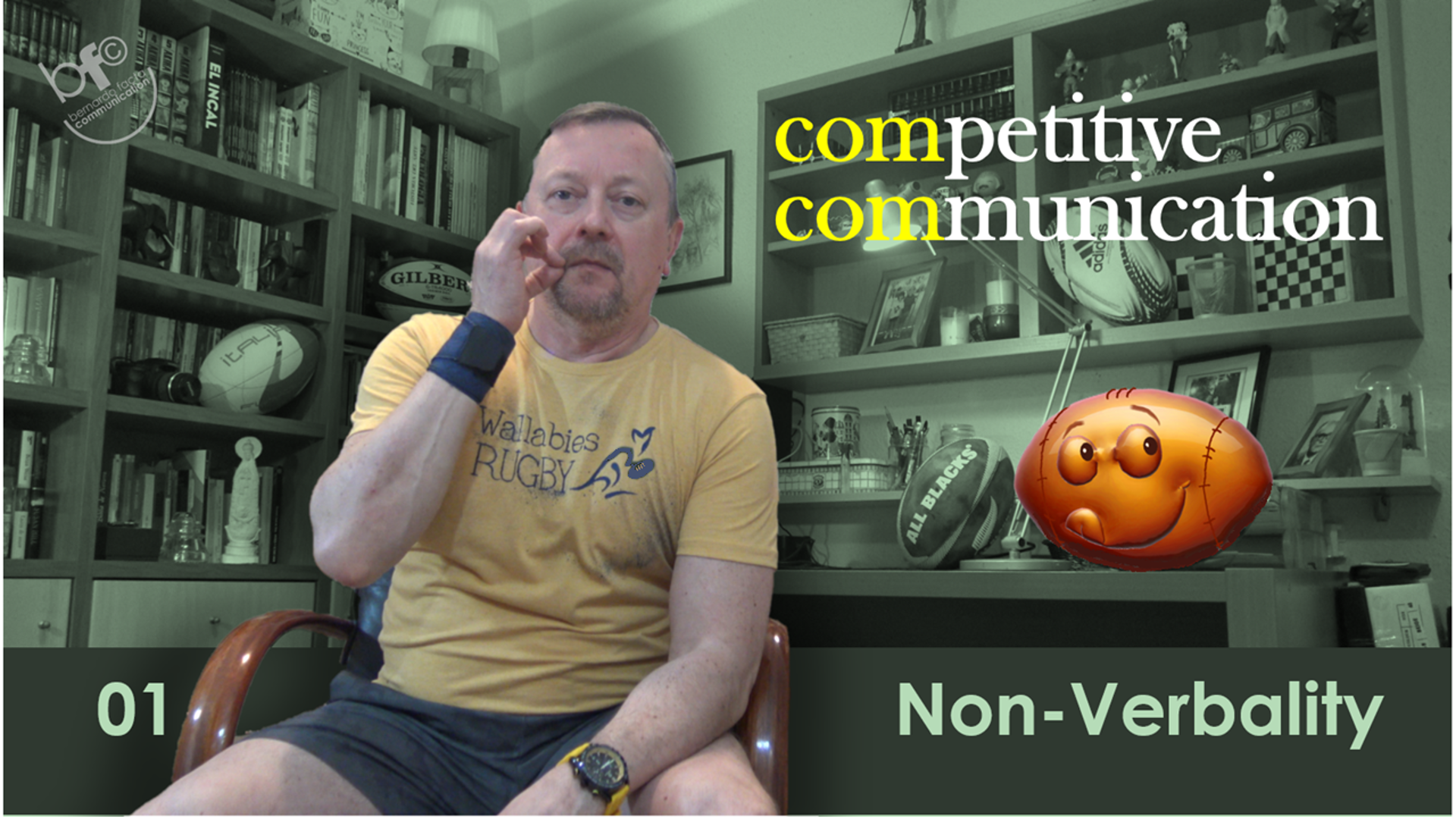
We’ve been evolving from simian ancestors to modern humans for roughly 7 million years (according to some solid theories).
Words, however, only showed up around 50,000 years ago.
So we actually share far more NONVERBAL language with the people we interact with than most of us realize. Ignoring that reality while obsessing over the “script” we plan to recite makes very little sense.

“Well begun is half done.”
Or, in practical terms: why it’s so important to trigger effective priming in the perception of our conversation partner from the very first seconds.
A good fragrance matters too (smell is the only sense directly connected to the original reptilian brain… and surprisingly influential in perception!), along with strategic facial expressions and body language whenever we interact face-to-face 😊
If the interaction happens over the phone, the voice becomes everything: Speed, rhythm, average volume, emotional charge, the architecture of sound and silence used for emphasis, intentional vocal highs and lows that energize the message and regulate attention… all of it matters. A lot.

The way we occupy physical space is already a message in itself. Depending on posture and gestures —especially arms and hands— we may project confidence, aggression, fear, skepticism, openness, or warmth. And there’s a deeply evolutionary reason for that: for our hominid ancestors, these signals helped detect threats or friendly intent instantly.
The great Ivan Pavlov, building on Heini Hediger’s work on “fight or flight” and related behavioral dynamics, left a profound mark on this field.

Closely tied to emotional transmission —which often leads attitudinal response in others— facial gestures act as immediate triggers in perceptual priming. A genuine smile works like an emotional magnet: it attracts and sustains pleasant attention. A hostile or tense expression, on the other hand, instantly creates distance by activating defensive reactions or expectations of aggression.
Here we strongly value the groundbreaking work of Paul Ekman, along with Flora Davis and others who deeply explored emotional expression and facial communication.

Following the foundational research of George Trager, Ray Birdwhistell, John Ohala and many others, we can define paralanguage as: “Everything we communicate through sound beyond words themselves.” 🙂 And especially: its direct impact on perception and the decisions our interlocutor will make afterward.
Dynamic variations in tone, volume and cadence transmit vitality, humanity and emotional presence. A flat, monotonous delivery with mechanically constant rhythm, meanwhile, silently communicates boredom, disengagement, or lack of genuine interest. And this deeply conditions the next dimension:

Psychologist Edward Hall’s influential work teaches us that communication also manages psychological distance, not just physical distance. Through gesture, posture, vocal warmth and countless subtle signals, we can deliver exactly the same verbal message in a warmly human way… or in a cold, emotionally distant one.
Long before focusing on textual precision, we should place far greater emphasis on Nonverbal Communication —the powerful foundation upon which verbal content itself will later be interpreted. Only after that come the literary layers: semantics, syntax, etymology, semiotics and the rest. That part of the story will come later 🙂
’til the Next One!
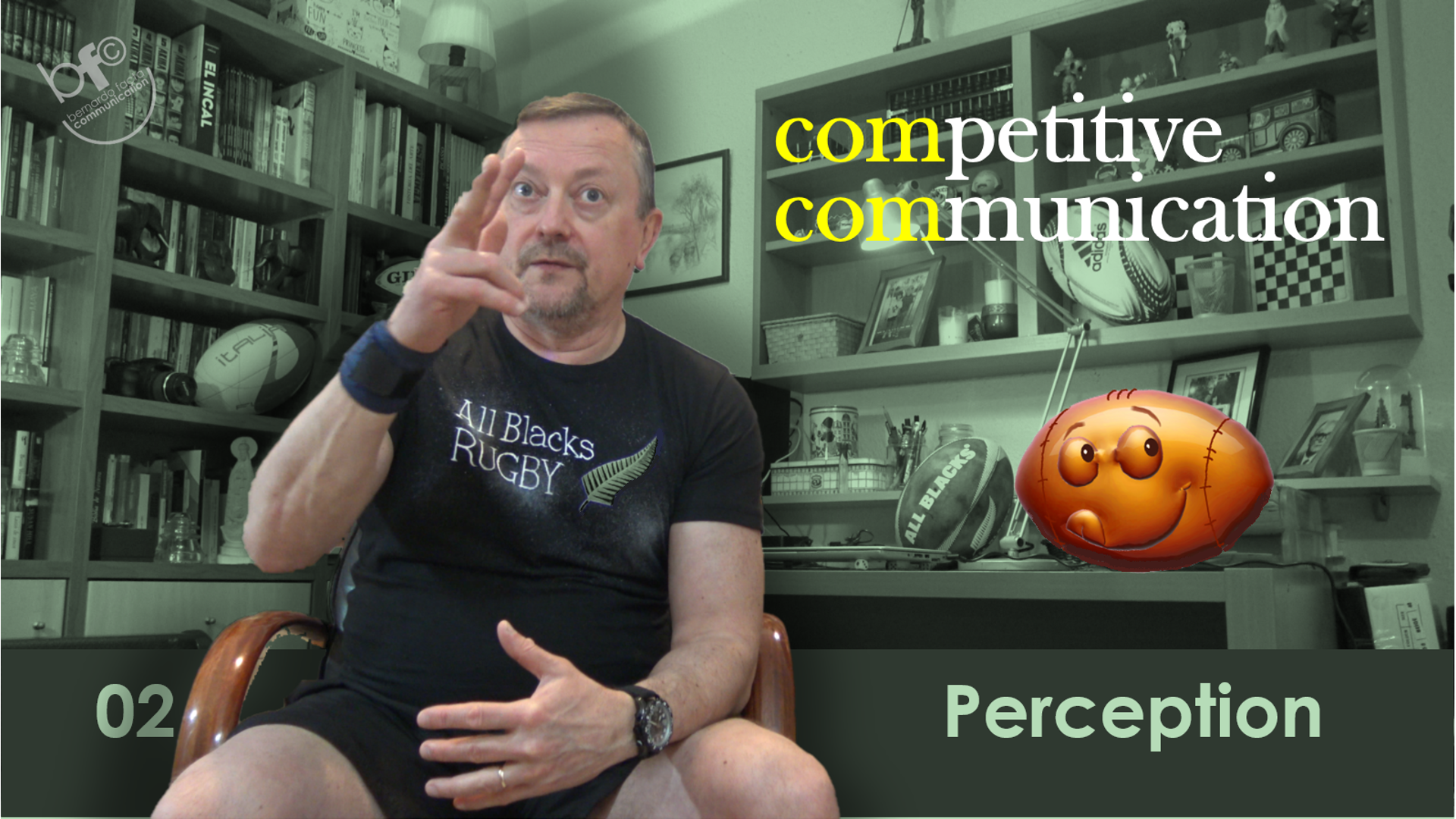
An unresolved EGO during the “narcissistic” stage of childhood (roughly between the ages of two and four) is often associated with a powerful drive toward the self—a form of unhealthy self-centeredness that seems to surround us from every direction, constantly reinforced by the ideas and messages embedded in the world around us.
Quite a challenging landscape, isn’t it?
As the great Dale Carnegie, one of the true masters of influencing people, wisely pointed out: we can achieve far more in a single week by taking a genuine interest in others than in an entire year spent trying to get others interested in us.

“He who asks the QUESTION holds the POWER.”
Asking questions is, at its core, an act of genuine interest in the other person. This is a key attitude because what we learn from them becomes incredibly valuable when it is our turn to communicate more persuasively.
A well-crafted question makes our conversation partner feel important, encouraging them to open up and talk about themselves through what they share, suggest, and reveal in their answers.
After all, the more you know about the person in front of you, the more effectively you can connect, influence, and create value in the interaction. As Sun Tzu famously observed, “Know your enemy, and you will not fear the result of a hundred battles.” 😊

Listening is the first true sign of Empathy—the next essential skill on this list. It enables us to better calibrate our own communication based on what we have discovered, understood, and interpreted about the other person.
Even in situations of conflict, listening is a crucial ability. As Gene Knudsen Hoffman famously said, “An enemy is someone whose story you have not yet heard.” There is profound wisdom in that insight. By listening first, we gain understanding; and with understanding comes the possibility of connection, resolution, and influence.

“Putting ourselves in their shoes” — perhaps the simplest definition of EMPATHY — means understanding their reasons, their intentions, and their objectives. And it is from that understanding that the greatest opportunity arises to communicate strategically and effectively.
Their need and our solution are simply two sides of the same coin. The key is to pay attention to that coin while it is still in the air, rather than ignoring it and assuming it will land on our side. That assumption is often the product of the EGO—distorting reality and dismissing anything that lies beyond the boundaries of the self.

More than simply observing, listening, or paying attention, we should learn to SCAN people—extracting the greatest possible value from what they communicate, even by going beyond their actual words and learning to “read between the lines.” It is often said that the most important part of a message is what is left unsaid. 😉
The goal is to activate our RADAR to its fullest capacity, paying attention to every ounce of the message, the way it is delivered, and the attitude that surrounds it. Quite often, how people express themselves provides more insight than what they actually say.
Tone, energy, pace, body language, emphasis, and choice of words can reveal motivations, concerns, expectations, and intentions that may never be stated explicitly. Those who learn to detect these signals gain a far deeper understanding of the person in front of them—and communicate far more effectively as a result.

Once we have learned to CONTROL our own side of the equation, the next step is to INFLUENCE the interaction with the other party who completes the system (the dialogue). The more we know and discover about them, the more effective our influence becomes—an influence that, of course, is aimed at a clear objective: to PERSUADE.
This drive is, in many ways, encoded in our evolutionary subconscious long before we are even born.
The ability to “step outside oneself” (anti-EGO) in order to “step into the other person” (Empathy, in a clearly metaphorical sense) is as rare as it is valuable these days.
“SAY WHAT YOU WANT… THE WAY THEY LIKE TO HEAR IT” is one of my favorite mantras in Communication. It came to me naturally while trying to distill a simple, accessible way of understanding Persuasion—available to anyone willing to Scan, Discover, and Communicate strategically, of course.
Good fight! Or rather… good Persuasion and a Win-Win outcome 😃
’til the Next One!
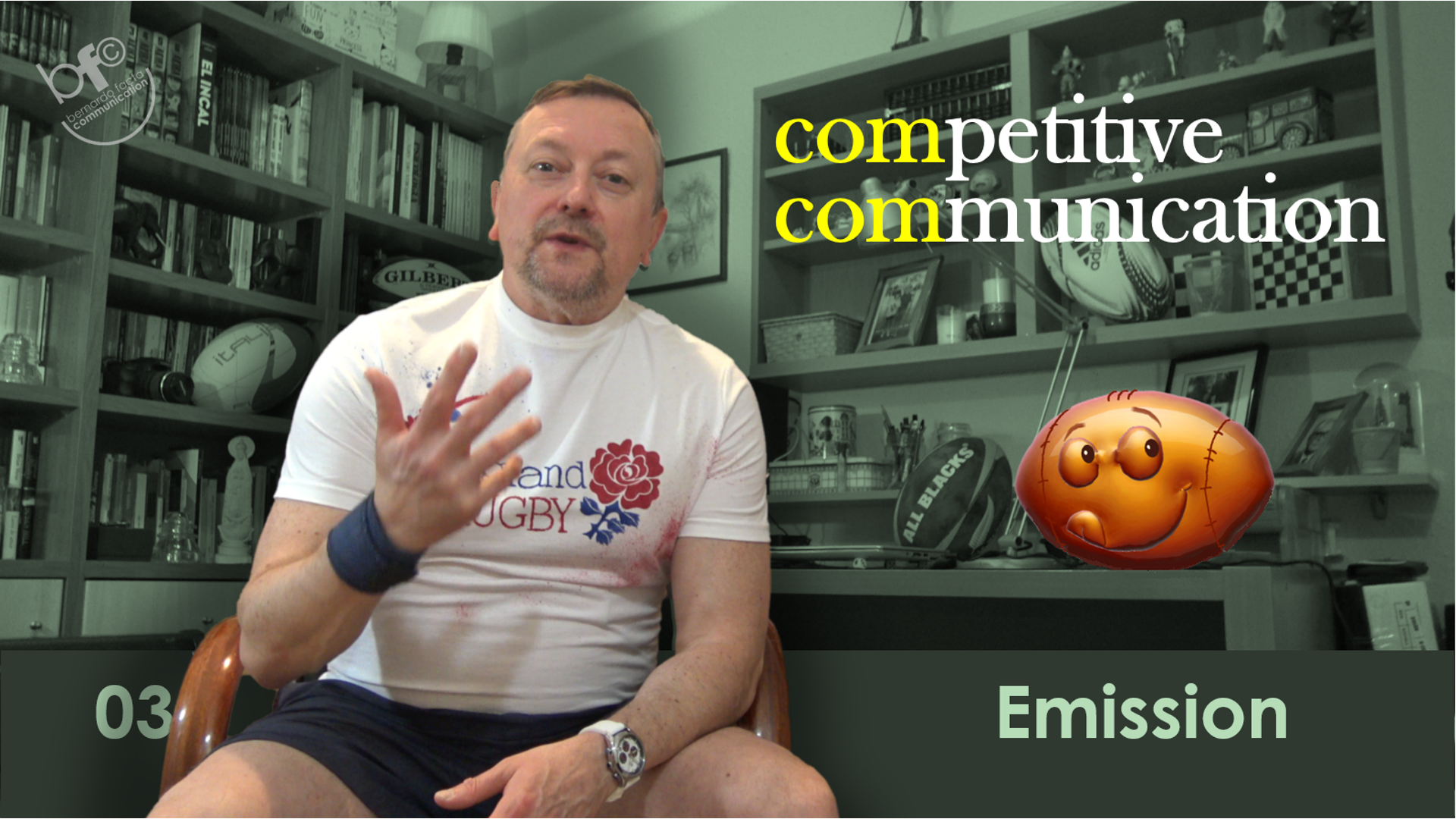
According to Aristotle and many other students of human nature, we are born, we exist, and we live for one purpose: to PERSUADE.
But are we truly aware of the POWER that lies within us through our ability to persuade — and thereby ACHIEVE OUR GOALS? From our very first act at birth (crying to persuade our mother to feed us so that we can survive) to our very last, whatever it may be, we are ALWAYS PERSUADING others to act, decide, and move in OUR FAVOR.
That is how we obtain what we want. If your mind tells you, ‘No, that’s impossible. I’m not that manipulative,’ pay it no attention. That voice comes from your conscious mind, which is far weaker than the unconscious and subconscious. The true powerhouse — the unconscious ‘boss’ — has carried the same message since before you were born: ONLY THE STRONGEST SURVIVE. And in today’s society, that means THOSE WHO PERSUADE BEST.

“One cannot not communicate,” said the great Paul Watzlawick, and every ounce of communication within us — nonverbal, verbal, emotional, gestural, paralinguistic, written or spoken, and more — ultimately serves the same purpose: helping us PERSUADE.
Whether consciously or unconsciously, our ideas, feelings, and actions align behind this fundamental drive for survival and success. In the age of the hominids, “the strongest” wielded a club.
Today, the strongest is a master of the powerful art of influencing the mind of others on every level — instinctive, emotional, and rational.
Let us become fully aware of that POWER within us… and learn to make the very most of it. 💪

How remarkably simple the ‘secret’ formula of Persuasion really is! In the end, it is OUR CREDIBILITY that invites others to accept us — and to accept our suggestions — provided that THEIR BENEFIT is clear when they ultimately choose to embrace them and take ACTION.
Let’s put it into practice: whenever we want something from someone, let us make it clear (without overemphasizing it) WHAT THEY STAND TO GAIN by giving it to us. And if it is difficult to find an irresistible advantage, then at least offer a reduction in discomfort 😊 — in other words, something that makes their situation ‘less bad’ than before. Do that, and we will greatly increase our chances of persuading them!

I consider the ‘Triangle of Persuasion’ to be one of the most powerful secrets in the world of Communication. Here it is:
POSITIVITY to ‘open doors’ and encourage acceptance. On the rational level: SAY IT POSITIVELY (‘Relax! We’ve got this!’ instead of ‘Don’t worry,’ whose negative wording may unconsciously trigger a defensive reaction). On the emotional and nonverbal level: SAY IT WITH A SMILE and a WARM, FRIENDLY VOICE so that the power of the message is multiplied and becomes (almost) irresistible.
CERTAINTY to ‘build trust’ — the key element in every interaction. Once trust is established, our counterpart is free to simply receive the message, because they recognize the evidence that ‘WE KNOW WHAT WE ARE TALKING ABOUT.’ This is subtle authority at work.
SIMPLICITY as the ability to uncover their personal ‘map’ of preferences. If knowing WHAT to say matters, what matters even more is HOW we say it — in the way we have identified as BEST suited to their PERCEPTION: direct, richly detailed, straightforward and easy to grasp, deeply reasoned, and so on.

Here is another principle whose sheer POWER makes me wonder why so many people overlook it: ‘SAY WHAT YOU WANT … IN THE WAY THEY LIKE TO HEAR IT!’
If we deliver the message from our own perspective and style, it will probably sound alien to them. But if we communicate in their preferred way, it will feel familiar — and that familiarity will make them much more comfortable accepting it.
‘Strategic Empathy’ in the purest Sun Tzu tradition: know your opponent, and victory becomes much easier 😁
As we explored in the previous chapter (PERCEPTION), of which this one is a natural complement, let us first learn to identify THEIR KEY CUES and then USE THEM in our own communication, with the clear purpose of allowing familiarity to encourage them to ACCEPT the proposal embedded in our message — our persuasive invitation to act in the way that best serves our objectives, so to speak.
And if the outcome turns out to be a true Win-Win, all the better! The next time around, they will be even more open to another interactive exchange in which they can benefit, relying on our credibility while helping us achieve the goals that matter so much to us as we continue along our unstoppable path to Success 😉
’til the Next One!
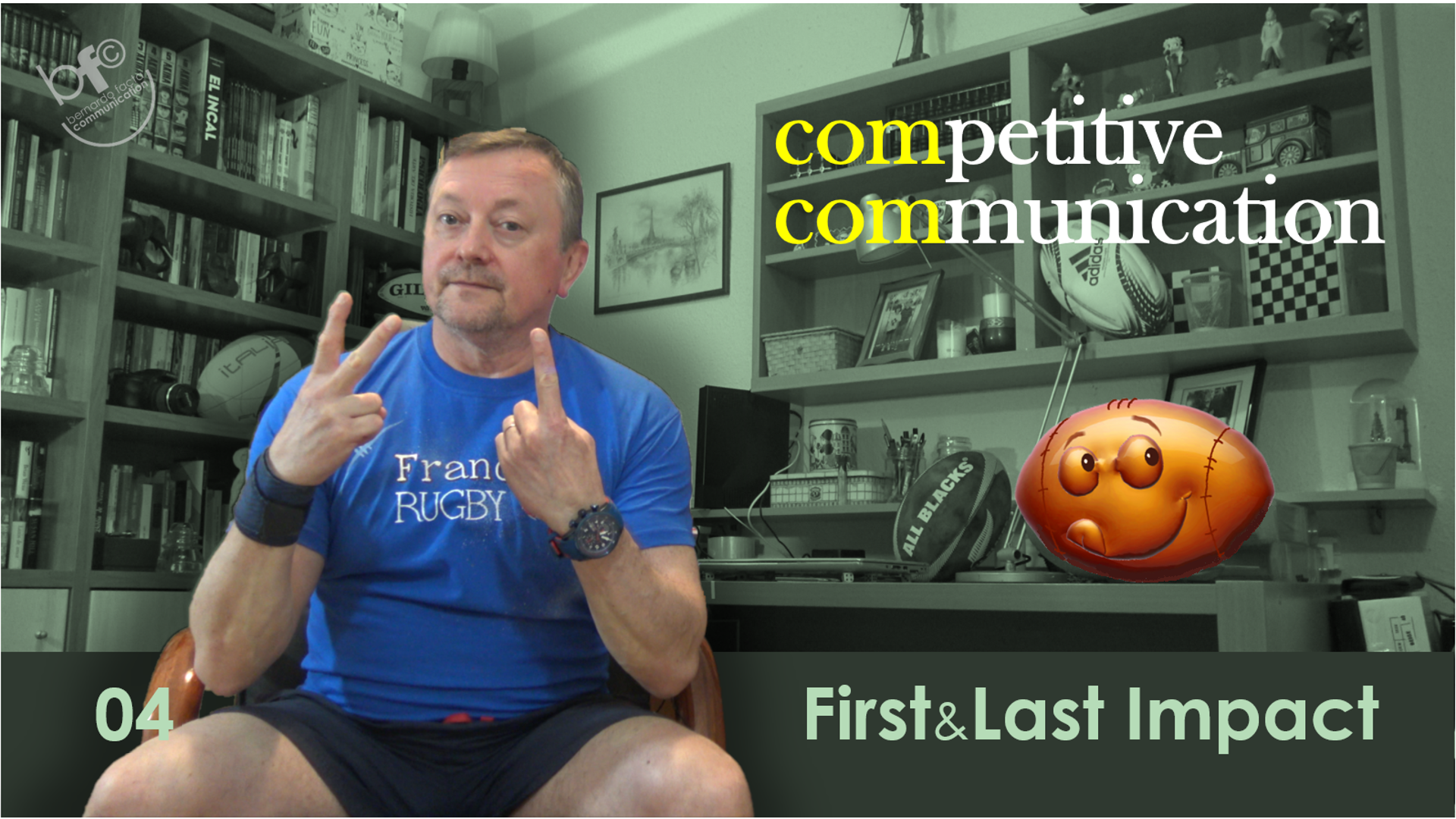
Successful speakers know exactly what to say at the beginning of their talks (creating impact through Relevance) and how to end them powerfully (creating impact through the Recency Effect). Now let’s see how these same success factors can make a difference in our everyday conversations too!
Starting with impact (priming) captures your audience’s attention from the very first moment and leads to a stronger, more engaged response from your listeners. It also sets the stage for a more successful conversation throughout…
…and ending with a powerful closing message ensures your audience walks away with something meaningful to reflect on. It gives your message a lasting place in their memory, long after the conversation is over. This creates positive momentum and greatly increases the chances of building a successful, long-lasting relationship 👍

“There is no second chance to make a first impression,” as Marshall McLuhan famously said. So let’s make the most of it!
It’s the moment to open doors of acceptance and connection with our interlocutors.
After that, we can learn how to leverage a strong beginning to ensure a successful continuation 😊
And, going beyond Machiavelli, we might say: “Well begun is well done.” 💪

What people first “buy” from you is… YOU! In other words, moving from the general to the specific (from the speaker to the message itself), it’s essential to remember another of McLuhan’s key principles: the “HOW” is always more important than the “WHAT.”
Your personality and communication style shape your message. In most cases, people first accept you, and only then do they accept what you say.

Another giant in the field of communication, Stephen Covey, advises us to always “begin with the end in mind” in everything we do—in other words, to be clear about the WHY behind our actions.
This clarity allows us to make faster and more accurate decisions in every situation we encounter on the path toward that goal—for example, during a presentation or conversation.

Now, let’s give Machiavelli his due! 😊
What ends well also creates a positive momentum effect. It tends to remain in the mind—and quite possibly in the emotions—of our interlocutor for a long time, continuing to work in our favor as a positive influence for future interactions.
Let’s appreciate the greater relative IMPACT of BEGINNINGS and ENDINGS in our everyday communication: phone calls, face-to-face conversations, virtual meetings, presentations, and more.
Starting with positive energy—OPENING DOORS—is essential. Ending in a way that KEEPS those doors OPEN, or even explores new ones, becomes a real guarantee of future success 😉
’til the Next One!
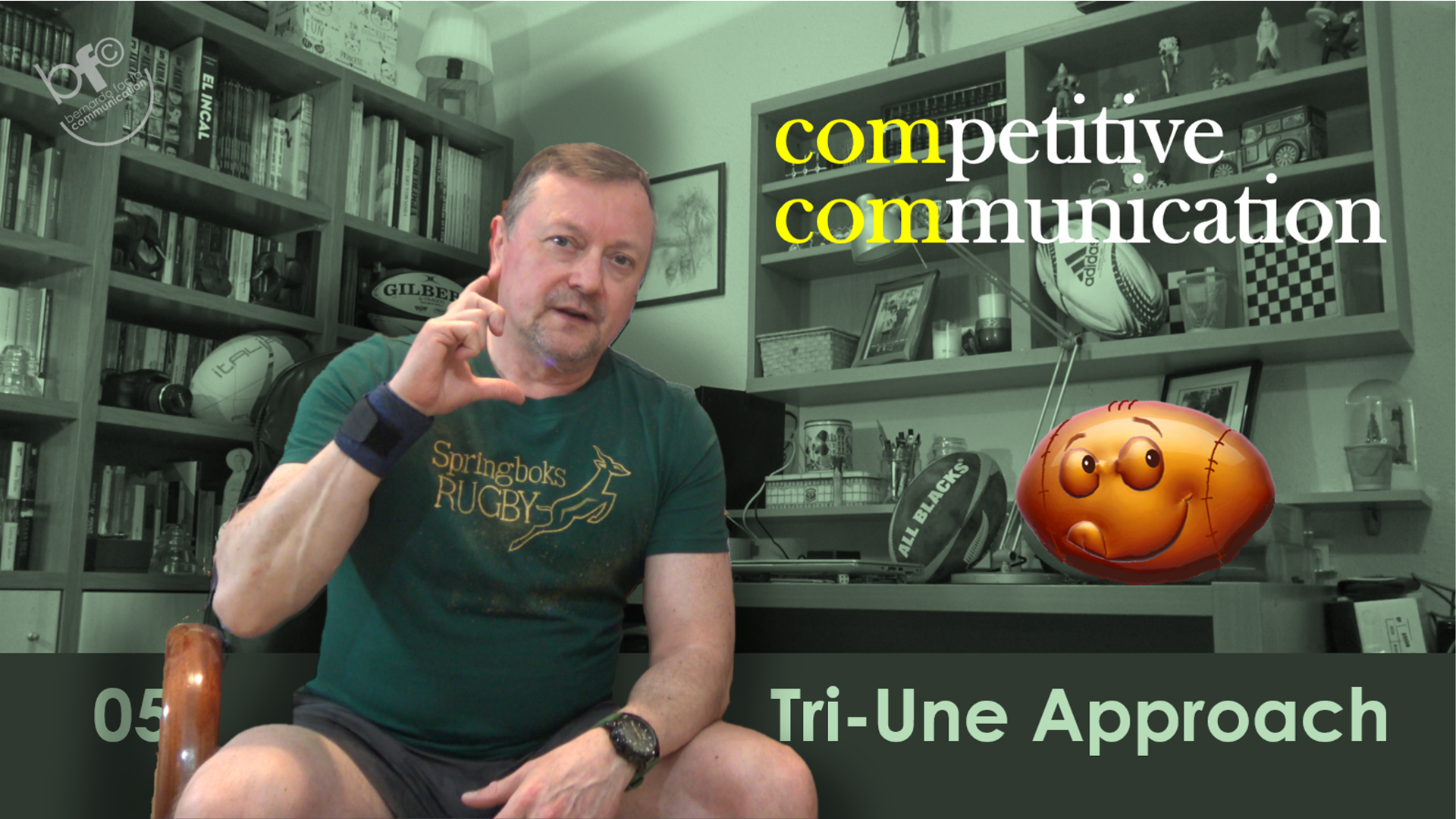
There’s a REPTILE within us! According to Paul MacLean’s theory, this ancient part of the brain has been driving our most primal INSTINCTS since the dawn of evolution. But here’s the big question: can we learn to control them?
Millions of years later, a MAMMAL arrived on the scene, bringing us EMOTIONS and the ability to CONNECT with other living beings—something the poor “reptile” could never do, as it was always on its own.
Finally came the HUMAN PRIMATE—the third “brain,” following the instinct-driven Reptilian brain and the emotion-based Limbic brain. It gave us the power to THINK logically and analytically, along with extraordinary higher abilities such as composing or performing music, evaluating complex situations, and much more. Three remarkable gifts from evolution… helping pave the way to our success!

The first brain—the Boss—is physically the smallest of the three. It sits at the base of the skull, just above the upper vertebrae, quietly overseeing some of our most fundamental functions.
Closely connected to the brainstem and the automatic processes that keep us alive—such as blood pressure, heart rate, and other vital functions—it has exercised its ancient authority from this command center for millions of years.
Our most basic INSTINCTS, especially the instinct for survival, are its natural territory and the driving force behind the way it responds to the world.
Its influence on decision-making is both immediate and undeniable. After all, it evolved to keep us alive, reacting in fractions of a second whenever danger appears—whether it was a saber-toothed tiger thousands of years ago… or a modern-day threat. 😁

The second—and incredibly important—brain is the one that generates and manages our EMOTIONS. Not a minor role at all! There’s a reason why the modern scientific definition of a human being is: “An emotional being… who also thinks.” 😊 It reminds us that reason, important as it is, came later in our evolutionary journey and naturally takes its place behind emotion.
This second brain emerged when its users needed to COMMUNICATE—to coordinate, cooperate, and act together in groups instead of living and surviving alone, as they had during the “reptilian” era. That’s why it is essential for meaningful interaction. It is called the Limbic brain because of its interrupted ring-like shape, located just above the small reptilian brain. In Latin, limbus means “ring.”
This unique combination of emotional intelligence and the ability to connect with others makes the Mammalian brain a key driver of our personal and professional success.

The Cerebral Cortex—one of evolution’s greatest masterpieces—is the shining star of this third dimension, also known as the Human Primate brain. Working together with the hypothalamus and other remarkable partners, it equips us with such an extraordinary range of intellectual abilities and psychological functions that they could easily fill an entire book.
Among the abilities that matter most to us is analytical reasoning—the capacity that enables us to develop solutions tailored to our clients’ needs, while also giving them the ability to evaluate whether those solutions are truly right for them. 😊 It’s easy to see, then, why this third brain plays such a vital role in our success, working in perfect synergy with the invaluable contributions of the two brains we explored earlier.

Keeping this three-layered reality in mind—the Reptilian, Mammalian, and Human Primate brains—or, in psychological terms, the unconscious, subconscious, and conscious mind, gives us extraordinary persuasive power whenever we interact with other people. When we understand who we’re really talking to, we can communicate with each of these three “animals” in the active brain of our conversation partner… and that’s when communication becomes truly effective. 😊
The REPTILE wants one thing above all else: survival. Give it the CALM that comes from feeling (or at least believing… 😄) that it’s in CONTROL of the interaction and completely safe. The MAMMAL is a volcano of emotions, constantly reflecting whatever its owner is experiencing. So let’s learn to ADAPT to those emotions—or, even better, CREATE them! Sharing their excitement when they’re enthusiastic, or offering reassuring confidence when they’re anxious, can make all the difference. And the HUMAN PRIMATE—through its Cerebral Cortex—wants clear logical proof that our proposal or recommendation genuinely serves its best interests. So let’s SHOW THE EVIDENCE! Let them see, logically and unmistakably, that if they have the “nut,” we have the “bolt” that makes everything fit together to their advantage. Simple!
If we can communicate effectively at all three functional levels of our audience’s brain, success is, to a great extent, already within reach. 💪
The most powerful winning formula, then, is this: Give them a genuine sense of calm by letting them feel the (apparent 😉) CONTROL is in their hands… Respond to their EMOTIONS in the most effective way possible—sharing their enthusiasm, or easing and counterbalancing their fear or discomfort whenever needed… And finally, provide compelling EVIDENCE that clearly shows why accepting our proposal, recommendation, or offer is in their best interest. That’s persuasive communication at its best.
’til the Next One!
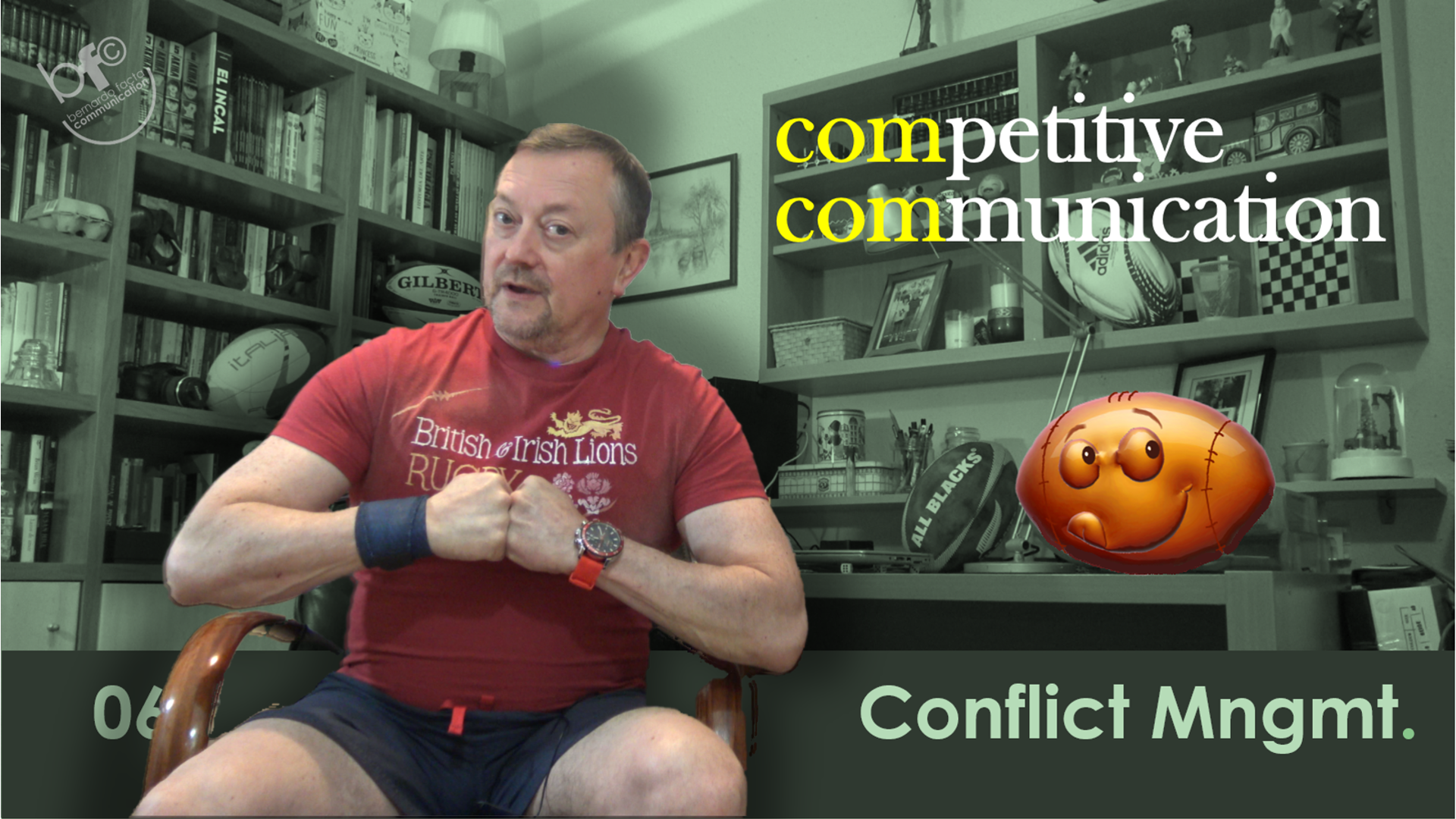
Unlike a Problem or a Dilemma, where we always have ‘control’ over the possible paths to resolution, a CONFLICT introduces the complexity of difference: different points of view, opinions, needs, visions.
We will therefore need to ‘step outside ourselves’ to assess and understand other perspectives …which can be truly enriching!
Once again, the skills of Competitive Communication (the kind that knows how to Persuade effectively) will be invaluable, drawing on Strategic Empathy, Negotiation and Goal-Oriented Assertiveness. Let’s get to it!

‘Life is an endless succession of problems,’ defined Karl Popper, industrial philosopher …if only that were all!
As mentioned in the intro, a problem is usually something we can solve on our own, provided we get its perception, assessment and decision-making on the best way to resolve it right.
A dilemma only adds a slightly higher degree of complexity (shall I holiday in the Seychelles or the Maldives? 😊), although finding the best possible solution for our own interests still remains in our hands.
With the much-feared Conflict, it is usually better to Avoid it, whenever possible through Prevention strategies. What matters most at the outset are our ‘antennas’: knowing how to sense in time when things may start to go wrong, putting us at odds with someone (or others) who oppose our position or convictions.
…and if we are already caught up in the ‘dance’ of Conflict, then it is well worth knowing how to manage it in the finest Machiavellian style: it matters less how a conflict begins than how we manage to make it end 😉

EMPATHY is everything when we seek Communication Success. ‘The better you know your enemy, the easier it is to defeat them,’ said the great Sun Tzu: ‘Strategic Empathy’ at its highest level!
Without going as far as considering an ‘enemy’ anyone who opposes our vision, actions or whatever else, it is always wise to identify their key drivers: who they are, what they are like, what they want = what they need …and their need is the BENEFIT we can offer to put an end to sterile arguments and propose solutions that move things forward 👍
From a rational standpoint, uncovering possible paths to resolution by analysing our situation and position + their goals and needs …from an emotional standpoint, managing our communication with warmth and positivity tends to deliver brilliant results.

Marshall Rosenberg, a psychologist specialising in Conflict, proposed a sequence of 4 steps to achieve ‘miracles’ in a difficult situation, such as speaking with someone whose behaviour leaves much to be desired …starting with a FACTUAL DESCRIPTION (neutral, with no accusatory overtones or dramatic indignation): ‘– You know? Every time you DO THIS…’ (to be continued in the next paragraph 😊)
‘…I FEEL DISAPPOINTED and feel the need to tell you about it…’ ← PERSONAL EMOTIONAL DESCRIPTION as the second step which, precisely, avoids blaming and instead favours taking personal responsibility…
‘…because it is clear that, with your talent and experience, YOU CAN EASILY DO IT THIS OTHER WAY (describe it)’ ← STRATEGIC SUGGESTION FOR IMPROVEMENT which, in itself, provides a valuable alternative instead of the ‘nothing’ that follows from simply accusing someone and pointing out what is wrong without offering anything more. This is the third step.
‘…and ENJOY all the good that comes with acting this way 🙂 Why not give it a try?’ A final touch with the power of the Benefit for the person we are suggesting should change + the gentle ‘request’ that leaves no room for arrogance or authoritarianism on our part. Since we’re at it: ‘WHY NOT GIVE IT A TRY this way?’ 😁

The most powerful strategy I know for saying NO with both elegance and firmness (in a way that leaves them with no choice but to ‘swallow it’ and move on 😁) contains 3 ingredients, the first of which is SAYING ‘YES’, that is: instead of emphasising what we simply cannot do and which makes us feel bad, weak, disappointing, etc., let’s highlight what we CAN do for them and will actually do if they accept it. A great advantage: if they refuse, then the ‘no’ is on their side, no longer ours!
Another key ingredient is the flexibility of OFFERING ALTERNATIVES, because a blunt ‘no’, with no nuances, can sometimes sound rigid or even aggressive. Alternatives expand on the first point: positively presenting options that may be useful to them instead of leaving them powerless with a simple ‘no’.
Finally, it is essential to EXPLAIN (politely giving information about) why ‘this is the best we can do’ for them instead of what they were asking or demanding from us, when that request was inappropriate or simply impossible to deliver. This way, they will understand that there are solid reasons behind it, rather than thinking we are saying no because ‘we don’t like them’ 😊 This ‘formula’ is practically FOOLPROOF and helps resolve situations in which we would normally feel very uncomfortable.

The ‘negotiating mindset’ often helps unlock rigid situations, opening the way to win-win solutions. It is therefore useful to know in advance how far we can compromise, after studying our counterparts’ needs, and to anticipate possible scenarios in which we can manage alternatives that may be of interest to them.
In typical Negotiation, strategies such as adding negotiable points often stand out (if there is only one thing on the table, it is difficult to achieve a win-win outcome because if one side wins, the other loses) as a way to increase the potential for mutual understanding by giving up what matters least to us while preserving what matters most …or the famous ‘ask for more’ (than you need), originally borrowed from children, which simply means asking for more than would actually work for us, so that we are satisfied when they very likely scale it back in their counter-offer 😊
We have seen by now that something almost inevitable in our lives, such as Conflict, can sometimes be our saving grace, and so we can ‘Machiavellianly’ acknowledge that if things end up better than they were once the conflict is resolved, then Welcome, Conflict!
Even so, most of us will prefer to avoid it in the best possible way (which, obviously, is very different from running away or procrastinating), and this will generally depend on PREVENTION: knowing how to draw on expert memory and always paying the closest attention to every moment and detail, so as to recognise when there are signs that have previously led to conflict, react swiftly and effectively, and take action to prevent the same chain of events from unfolding — thereby seeking a different outcome, one that is more positive and useful for everyone 👍
’til the Next One, Winners!
Curious? Want to Know More? · ¿Ganas de Saber Más? ¿Curiosidad?